
Bank of America (BofA) Securities expects India to be the third-largest economy in the world by 2031. The economic rise could become a reality by 2028, but the Covid pandemic delayed the pace, BofA Securities economists Indranil Sen Gupta and Aastha Gudwani wrote in a report.

Lenders can now initiate recovery proceedings since the SC has lifted the standstill on asset classification, which protected stressed accounts from slipping into NPAs.

In the state of the economy report, the RBI said bond vigilantes could undermine the recovery, unsettle financial markets, and trigger capital outflows from emerging markets.

'We will be looking to prune our portfolio to make GIC Re a healthier entity.'
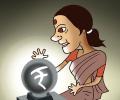
The race to get a New Umbrella Entity (NUE) licence for digital payments may get crowded. As many as six consortiums are said to be in the fray to apply for an NUE licence, which would create a for-profit National Payments Corporation of India (NPCI)-like body for retail payments. A consortium led by Financial Software and Systems (FSS), a leading provider of payment products and payment processor, is in talks and may file an application to the RBI for an NUE license, said sources aware of the development. The other constituents of this group include Indian Bank, Central Bank of India, India Post Payments Bank, National Bank for Agriculture and Rural Development (Nabard), and a few small finance banks.

In India, it is not easy to fight it out with the large banks which are nimble-footed and technology-savvy and are continuously innovating on the retail turf with newer products for customer acquisition.

The product, named Saral Suraksha Bima, will have a maximum sum assured of Rs 1 crore and minimum Rs 2.5 lakh.
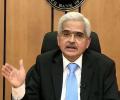
With inflation under control, the Monetary Policy Committee's (MPC's) job is to support growth because the economy had recovered well from the lows in the initial months of the pandemic, according to the panel's members, who met in the first week of this month. The minutes of the meeting show the Reserve Bank of India (RBI) governor in his statement said: "Given the sharp moderation in inflation along with a stable near-term outlook, monetary policy needs to continue with the accommodative stance to ensure that the recovery gains greater traction and becomes broad-based." Ashima Goyal, external member of the MPC, said: "The current macroeconomic configuration and its expected future evolution imply there is space for the MPC to continue to support the revival of the economy with inflation remaining in the target band."

The bond market is not in a mood to reason with the Reserve Bank of India (RBI) on keeping yields low. The 10-year bond yields continued to rise for the fourth straight session to close at 6.202 per cent from its previous close of 6.135 per cent. The yield was at 6 per cent a week ago. The RBI wants the yields to remain at 6 per cent, but bond dealers say the central bank will have to step up its bond-buying programme.
The central bank bought the 10-year bonds at 50 paise above the prevailing rate, and brought down the yields from 6.08 per cent to 6 per cent mark.
However, the RBI is still not in a mood to issue an OMO calendar, which was the expectation in some sections of the market.

While it took UPI three years to reach a billion transactions in a month, the next billion came in just a year. Digital payments, especially UPI, saw increased adoption in 2020 due to the Covid-19 pandemic.

The continuing fiscal stimulus is heavily tilted towards capex, to the extent that it chips away a part of revenue spending. Accounting for other areas of revenue expenditure, such as salaries, pensions, subsidies and defence (committed spend), the room to spend on welfare schemes, health and education will narrow in FY22.

Digital lending apps extend small amounts at exorbitant rates. Payment delays invite messages to customer or close family members, often with sensitive information such as Aadhaar and PAN Card scans.

A user just needs to download any app floated by such fraudsters and apply for instant loans. These apps are mainly concentrated on Google Play considering the reach and popularity of Android systems.

The hoarding of cash accentuated from the very start of 2020, when the coronavirus pandemic started taking hold the world over, and fear of the pandemic prodded people to remain liquid for emergency use.

These top two apps account for more than 78 per cent of the UPI market in terms of volume of transaction, and 86 per cent of the market by value of transactions in December.

Irdai had introduced two Covid specific products in the market - Corona Kavach and Corona Rakshak - that saw huge acceptance among the consumers as these products had lower premiums.

Surge in UPI transactions is because of an increased consumer interest in making bill payments and recharging mobile phones online, and purchase of non-essential goods on e-commerce platforms.

This will help expand the distribution channels, said Subhash Chandra Khuntia, chairman of the insurance regulatory and development authority of India.
 © 2026 Rediff.com - Advertise with us - Disclaimer - Privacy Policy - Sitemap - Feedback - About us - Terms of use - Grievances